Under FAME-II, automakers provided subsidies to electric vehicle (EV) customers at the time of purchase, with the understanding that the government would reimburse the firms later.
Arun Jaitley presented the Budget in Parliament on Saturday.

The closure of the Strait of Hormuz has disrupted some 20 per cent of the global flows but even if it opens, damages to production facilities in the region will take time to repair, points out Sunita Narain.
Even as the government debates whether to continue the FAME-II subsidy for electric vehicles (EVs), the share of such vehicles in overall sales is decelerating, after witnessing a heady growth in the first few years. The penetration of EVs - electric two-wheelers, passenger vehicles, three- wheelers and other segments collectively - in the first 10 months of FY24 has been pegged at 4.3 per cent, compared to 3.7 per cent in FY23, according to credit rating agency ICRA.

India's rapidly ageing truck fleet, with 42% of vehicles over 12 years old, is set to trigger a replacement-driven growth of 3-5% annually over the next five years.

German Car maker Audi plans to offer cars that can do 400 km on a single charge, says Ajay Modi.
A series of flip-flop on policies and a non-existent charging infrastructure are the biggest challenge in achieving the target of selling 6-7 million hybrid and electric vehicles by 2020.

The India-EU free trade deal could help Indian-made cars enter Europe at lower costs and challenge Chinese dominance.

Passenger vehicle dispatches from companies to dealers declined 9 per cent year-on-year to 321,840 units in August.

Future strategy will not just revolve around EVs: Maruti Suzuki's Ayukawa. Maruti Suzuki's MD&CEO says electric vehicles cannot be a solution outside the cities.

The tariff removal will lower prices of Harley's large-displacement imported motorcycles, which retail between 14.5 lakh and 45.8 lakh but after the duty cut volumes are expected to remain modest.

EV manufacturers point out that converting a regular petrol car into a flex-fuel vehicle requires only about Rs 17,000-25,000 per unit, whereas developing an EV demands vastly greater investments in research, battery development, and localisation.

'The next two to three weeks will not be decided in Washington.' 'They will be decided in Tehran, in whatever calculation Iran makes about the costs of continued resistance against the costs of appearing to have yielded.'

With Budget concessions in place to propel the Indian automobile industry on a green drive, manufacturers are planning electric and hybrid variants of cars and two-wheelers.

'In any aviation emergency, the first rule is aviate -- fly the aircraft.' 'The fact that the commander's voice is not on the recording simply means he was focused entirely on flying. It does not imply anything more than that.'

After a record-breaking year, India's automobile industry is entering 2026 on a relatively strong footing, with sales growth expected in the 6-8 per cent range. The outlook is underpinned by policy support, including GST rationalisation, easing monetary conditions, and income tax relief, which together are likely to improve affordability and sustain consumer demand across vehicle segments.

The demand for passenger vehicles (PVs) is expected to sustain even beyond the ongoing festival season as a new set of customers, those who gained confidence to buy cars following the recent GST rate cuts, will begin to visit dealerships now, said Shailesh Chandra, president of the Society of Indian Automobile Manufacturers (Siam), on Wednesday.

Siam argues that a 2040 ban could destabilise ongoing and future investments and threaten millions of jobs in the automotive value chain.
'The reported deal between the European Union and China should mitigate it (shortage) for the medium to long term. Let's wait and watch how this plays out.'

Maruti Suzuki, India's largest producer of small cars, stands to benefit the most.
India must act decisively to fully leverage the vast opportunities that exist in India for developing the entire rare earth magnet ecosystem, SIAM president Shailesh Chandra said on Thursday. The government is considering incentives for the production of rare earth minerals and magnets in response to China's restrictions on its global supply, which have disrupted the supply chain.
Top executives from Siam and major carmakers recently met with Heavy Industries Secretary Kamran Rizvi to discuss the matter. Officials from NITI Aayog were also present.
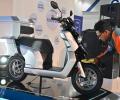
Seven electric two-wheeler companies have suffered a cumulative loss of over Rs 9,000 crore on account of unpaid dues and loss of market after their subsidies were stopped last year, the Society of Manufacturers of Electric Vehicles (SMEV) said on Wednesday. These companies have also been directed by the govt to refund the subsidies availed by them. The audit by SMEV's chartered accountants indicates the total, cumulative damages to affected companies could account for over Rs 9,000 crore on a conservative basis, it noted.

Maruti Suzuki India (MSIL) said on Thursday its operations are unaffected by the global rare earth magnet shortage, but added that the situation is "uncertain and evolving". The firm said it is exploring multiple solutions to maintain continuity in operations and will notify stakeholders in case of material impact.

Companies making electric two-wheelers, through their association Society of Manufacturers of Electric Vehicles (SMEV), have taken on the Department of Heavy Industries (DHI), saying they did not get subsidies for even half the mandated 1 million units they manufactured. Subsidies are given under Faster Adoption and Manufacturing of Hybrid and Electric Vehicles 2 (FAME II). In a petition to the parliamentary standing committee on industry energy and estimates, the SMEV said the department had done an "accounting error" by showing that it (the department) was close to achieving the mandated target by including sales of the EVs that were "not funded" under the scheme.

For FY26, the company has adopted a cautious outlook, anticipating domestic growth to broadly track the industry's low single-digit estimated growth amid ongoing economic headwinds.

In absolute terms, both types of cars must cut emissions by about 28-29 g/km. But in percentage terms, the lighter 900-kg car must reduce emissions by 27 per cent, while the 1,500-kg car needs a 22 per cent cut. And the target becomes progressively stringent for both -- but, once again, the tightening is sharper for the 900-kg car than for the 1500-kg car.

With just a month left in this financial year, electric two-wheeler sales, so far, are at just 62 per cent of the ambitious target of 1 million units set for 2022-23 by the NITI Aayog. According to VAHAN data, compiled by the Society of Manufacturers of Electric Vehicles (SMEV), 620,006 units of electric two-wheelers were sold across the country in FY23 until February 21. Though the industry may miss the 1-million target, sales in FY23 are already up 146 per cent from 249,621 units sold in FY22.
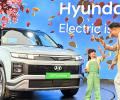
With nearly 100 launches and unveils, the Bharat Mobility Global Expo 2025, held in Delhi from January 17 to 22, made one thing clear to automobile enthusiasts: Electric vehicles (EVs) are the way ahead for the Indian auto market for years to come.
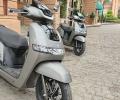
'Price competition is fierce, with many companies selling at zero margin.' 'This pricing pressure is challenging smaller companies and will likely drive some out of the market over time.'

The driver was speeding and the bus swerved for about 200 metres before it dashed into multiple vehicles on the road.
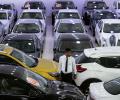
Traversing from being just vehicle manufacturers to mobility solutions providers amid a raging debate over which eco-friendly technology must be incentivised, the Indian automobile industry is driving in the new year under the shadow of a slowdown in sales with the post-pandemic pent-up demand in distant memory. The shift in the auto industry -- where advanced technologies like autonomous driving, vehicle intelligence, connected features and electrification are quickly gaining traction -- will be reflected in the upcoming Bharat Mobility Global Expo in which India's flagship Auto Expo has been clubbed to be held from January 17-22, 2025 in Delhi-NCR.
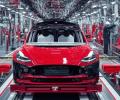
The meltdown in Dalal Street that wiped out investor wealth to the tune of 44 trillion in 2025 also seems to be having a ripple effect on the country's vibrant automobile retail sales.
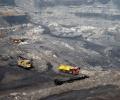
The 17 rare earth elements that are at the centre of the current crisis are critical components of everyday products -- from cars to jet engines to electronics like smartphones and flat-screen TVs.
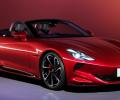
Maruti Suzuki, Tata Motors, Mahindra & Mahindra, Hyundai and MG Motors are gearing up to introduce EVs in India.

Major two-wheeler (2W) manufacturers in India witnessed a single-digit decline in domestic sales in November after dispatches had picked up in October for the festive season when wholesales went up by 14 per cent and retail also grew by 36 per cent.
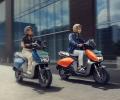
Hero MotoCorp is expecting its electric vehicle (EV) business to break even once it reaches monthly sales volumes of 25,000 to 30,000 units, which is a couple of years away, Chief Financial Officer (CFO) Vivek Anand said on Tuesday. "This year, in 2024-25 (FY25), if I really look at my EV performance, our volumes have grown by 200 per cent," Anand told analysts during the company's post-results conference call.

'There is a need for a national task force with a singular objective to increase automotive exports.'

E-vehicles may face pollution hurdle with hazardous batteries. One lithium-ion battery has a potential to poison the whole water aquifer of Delhi.
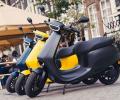
Electric two-wheelers have zipped past the half-a-million registration mark and achieved a market penetration of 4 per cent at the fag end of Calendar 2022, according to data released by VAHAN. According to VAHAN data for the year (until December 27), 560,000 two-wheelers were registered in the country, up a staggering fourfold over 2021, when only 136,000 were registered, and when electric vehicle penetration was a mere 1.05 per cent. The total number of two-wheelers (internal combustion engine, or ICE, and electric) registered so far in 2022 stands at 14.5 million, up only 12.7 per cent over the previous calendar year.
 © 2026 Rediff.com - Advertise with us - Disclaimer - Privacy Policy - Sitemap - Feedback - About us - Terms of use - Grievances